Hotel Decorative Lighting

Lighting is usually the last FF&E item specified and the first one to slip. The drawings show a fixture in elevation, the schedule carries a wattage, and the price is fixed before anyone has checked the backplate against the wall substrate or the driver against the control protocol. Below is the range we build for guestrooms, corridors and public areas, and the items a lighting schedule has to settle before a quotation is worth reading.

Send a BOQ, drawing set or specification. You get a costed response, or the questions needed to produce one.

What decorative lighting do we build for hotels?

Five families, all made to the elevation rather than to a stock size. The finish, the colour temperature and the driver are chosen per project; the profile, the arm length and the backplate are drawn to the room.

Where the schedule usually fails. A sconce centred at 1700 mm reads correctly on an elevation and lands above the shoulder of a seated guest at 1500 mm. Mounting heights are fixed against the furniture — headboard top, mirror top, desk surface — not against the finished floor, because the floor is the one datum the furniture never agrees with.

Which fixtures do hotels actually specify?

Thirteen pieces from the current range, photographed in 3000K. Sizes are the production sizes; where a family runs in several lengths the options are listed. Every one of them can be re-proportioned, re-finished or re-lamped against a project drawing.
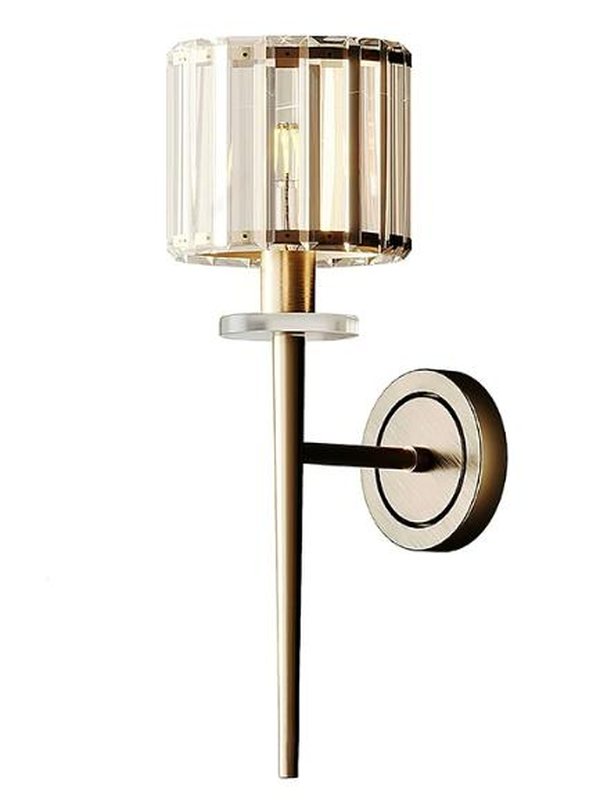
Brass column wall light with a fluted crystal shade for a hotel corridor
Wall light
Crystal Column Wall Light
Model 5006 · brass, fluted crystalØ16 × H50 cm · antique brass
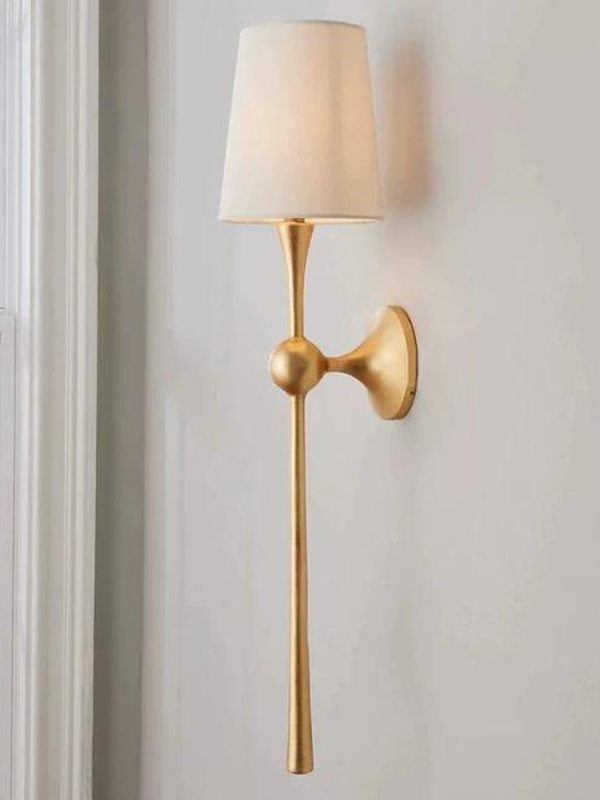
Brass long-arm wall sconce with a linen shade beside a hotel bed
Wall light
Long-Arm Shade Sconce
Model 5014 · brass, linen shadeW19 × H68.5 cm · natural brass
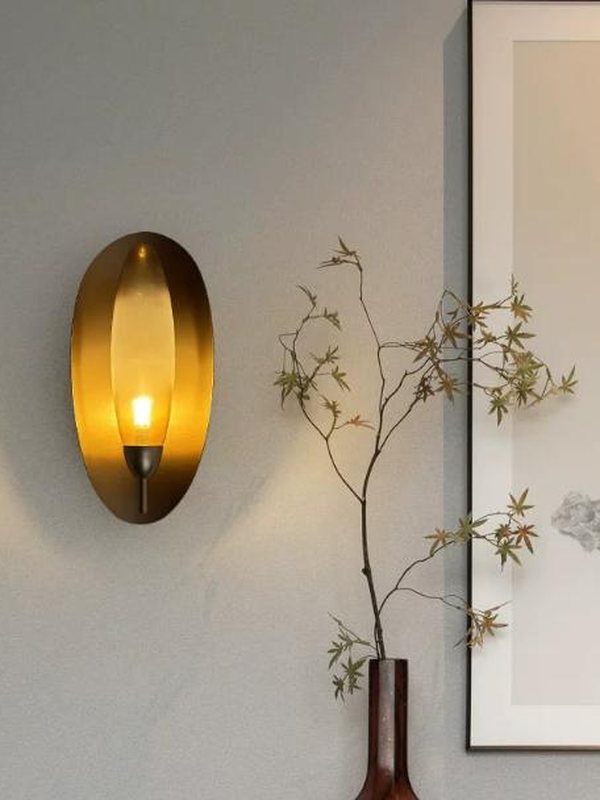
Oval amber glass wall light on a hotel corridor wall
Wall light
Oval Glass Wall Light
Model 5020 · steel, amber glassØ40 cm · bronze
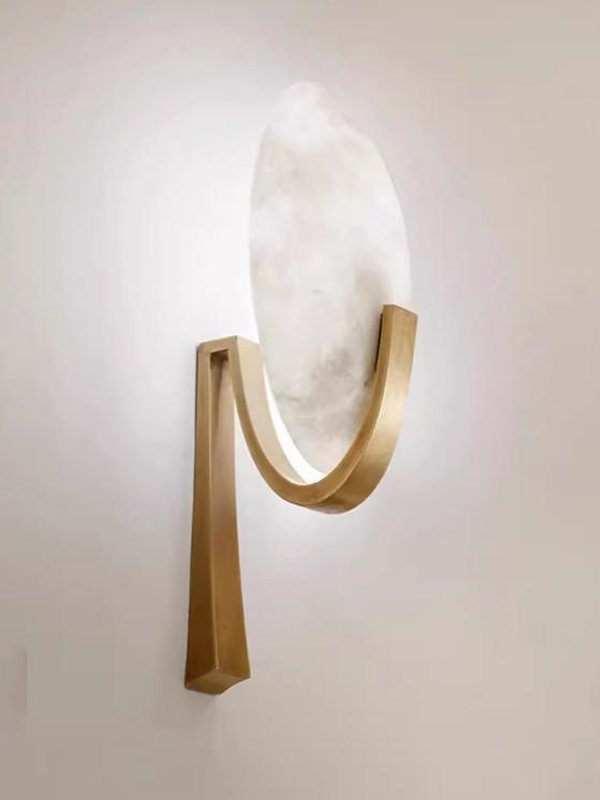
Brass wall light with a natural alabaster blade diffuser
Wall light
Alabaster Blade Wall Light
Model 5021 · brass, natural alabasterMade to order · antique bronze
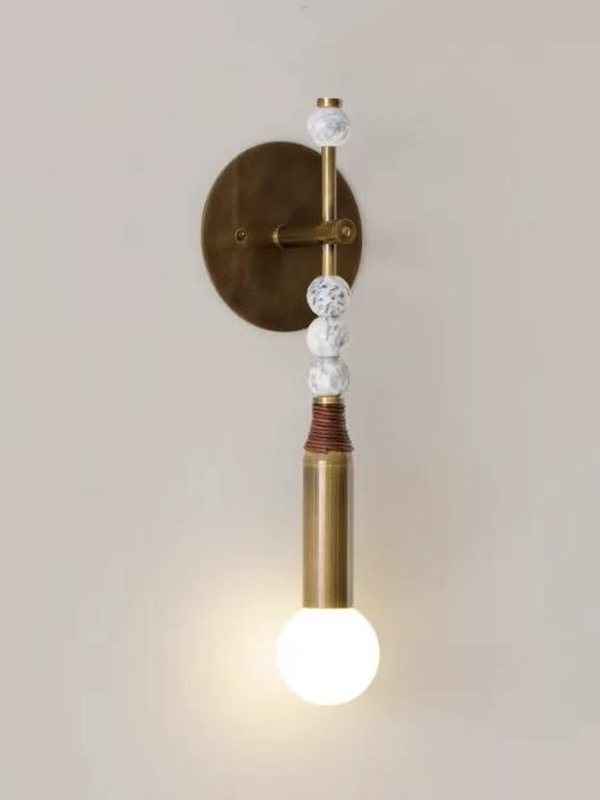
Brass wall light with a crystal drop and exposed lamp
Wall light
Crystal Drop Wall Light
Model 5024 · brass, crystalMade to order · antique brass
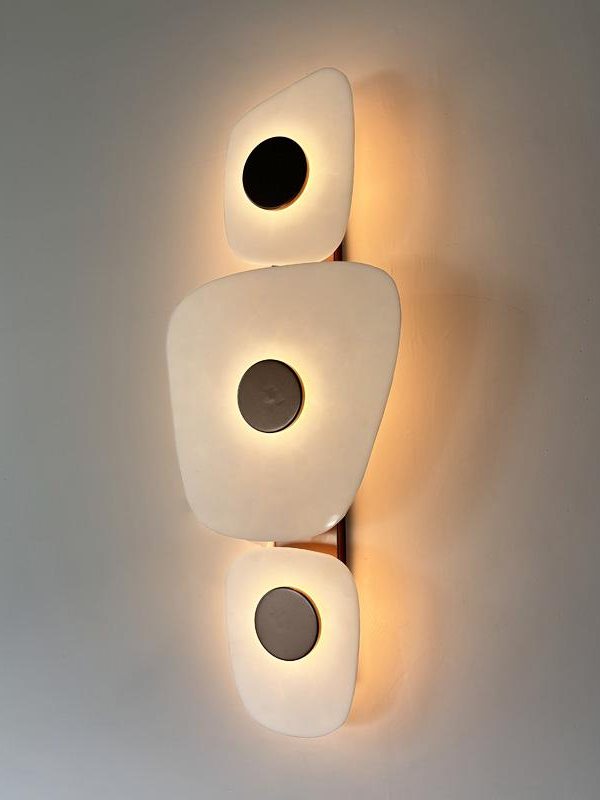
Triple alabaster paddle wall light glowing warm in a hotel corridor
Wall light
Triple Alabaster Paddle Light
Steel, natural alabasterH90 × W30 cm · 13 cm off wall · cocoa brown
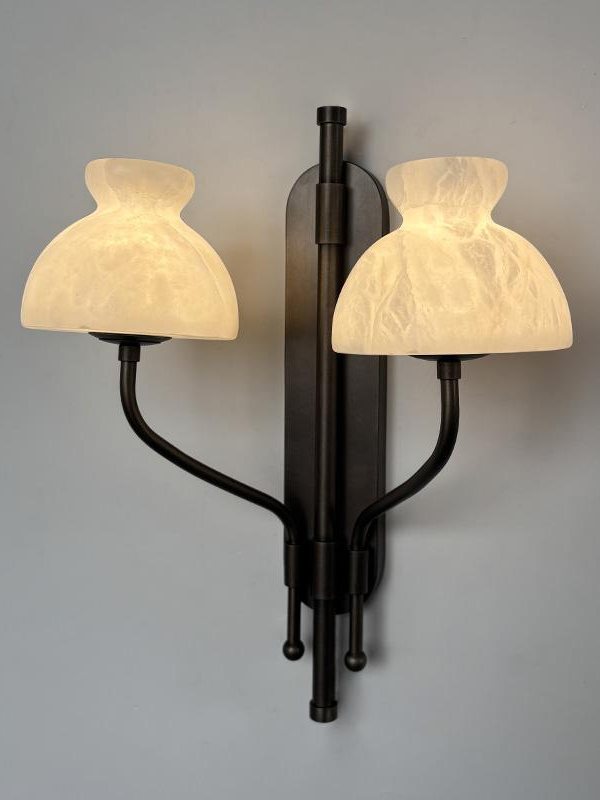
Matte black twin-shade wall sconce with alabaster diffusers
Wall light
Twin Shade Sconce
Steel, natural alabaster shadesH42 × W32 cm · 20 cm off wall · matte black
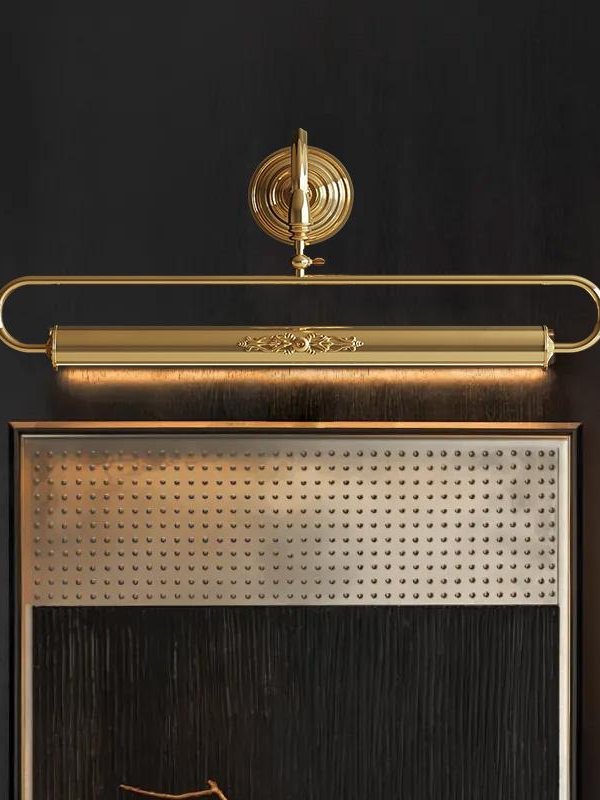
Brass picture light mounted above a dark panel in a hotel suite
Picture light
Picture Light
Model ZS-450 · brass, acrylic diffuserL45 / 58 / 78 × 26 cm · natural brass
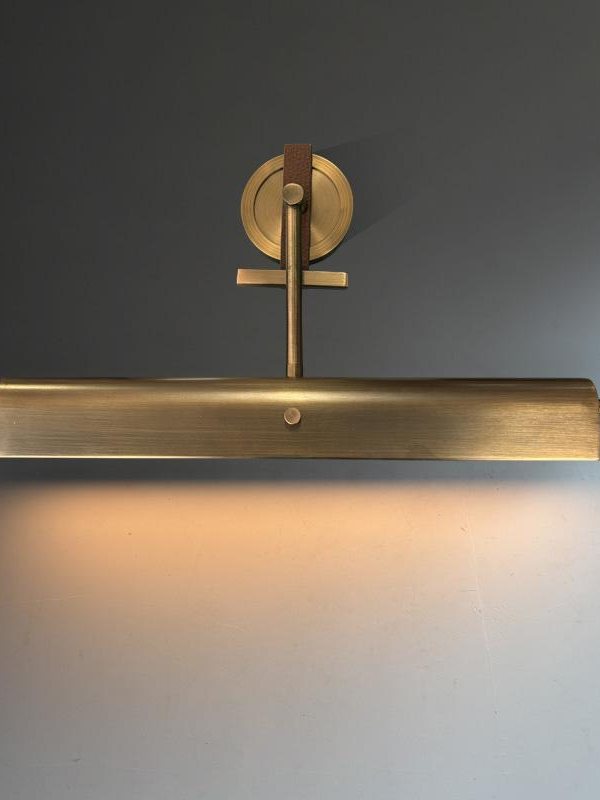
Brass linear light mounted over a bathroom mirror
Mirror light
Over-Mirror Linear Light
Model XZS-459 · stainless, acrylic, leather wrapL22 / 30 / 40 / 60 × H22 × 11 cm · antique bronze
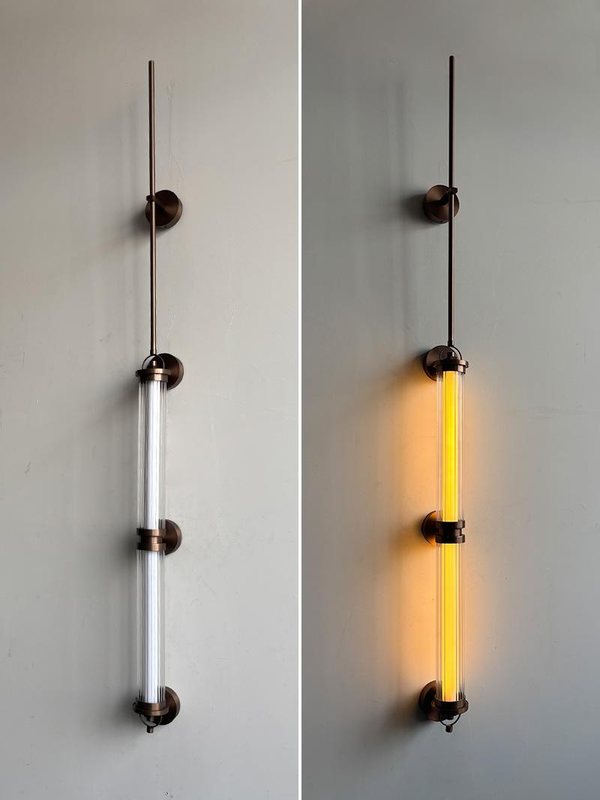
Bronze glass tube wall sconce shown unlit and lit
Linear
Glass Tube Sconce
Model 104 · stainless, glassL60 / 80 / 100 / 120 / 150 × 8 cm · bronze
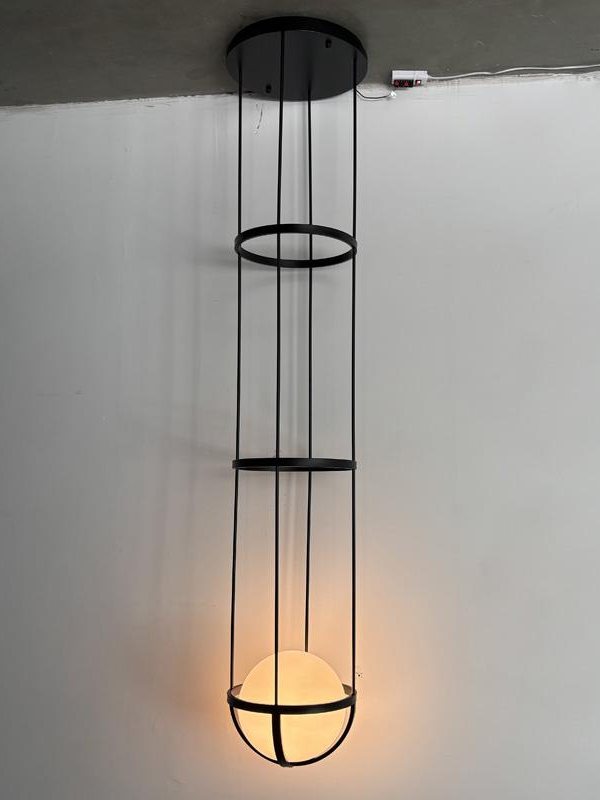
Black cage pendant light with a warm diffuser over a hotel bar
Pendant
Cage Pendant
Steel, acrylic diffuserL180 × Ø30 cm · matte black
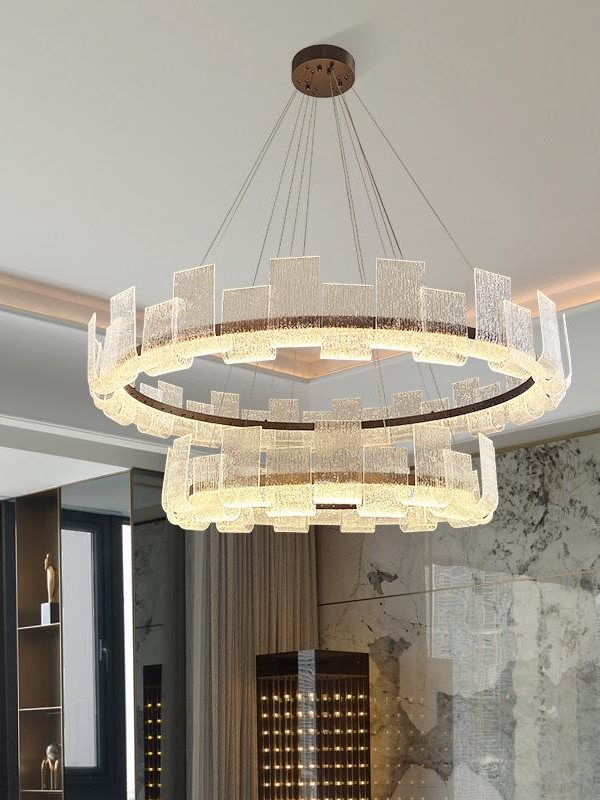
Two-tier ring chandelier installed in a hotel lobby
Chandelier
Two-Tier Ring Chandelier
Metal, acrylic panelsØ120 + Ø90 cm · antique bronze
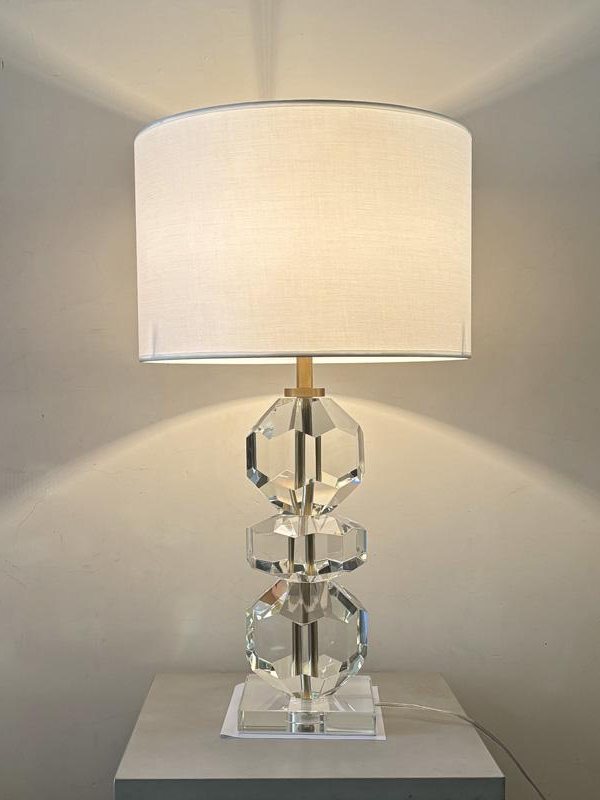
K9 crystal table lamp with a fabric shade on a hotel nightstand
Table lamp
K9 Crystal Table Lamp
Stainless, K9 crystal, fabric shadeL70 × Ø40 cm · Ø18 cm base · white shade

What has to be on the spec before a price means anything?

A decorative fixture is priced from four things: metal, glass, driver and labour. Three of the four are invisible on a mood board, which is why two quotes for the same picture can differ by 40 per cent and both be honest. These are the eight lines that close the gap.

Spec lineWhy it moves the price
Mounting height and wall substrate A backplate that lands on plasterboard needs a timber pattress or a proper toggle; one that lands on tile has to be drilled before tiling, not after. Retrofitting the fixing costs more than the fixture.
Backplate and canopy size The plate has to look right on the wall and still reach the stud or the substrate behind it. We build to the drawing, which is why a photo alone cannot be quoted.
Driver location and access Drivers fail before LEDs do. A driver sealed inside a coffer means the ceiling comes down in year four. Specify a remote box with a serviceable cover, or a fixture with a removable plate.
Dimming protocol Phase-cut, 0-10V, DALI-2 and wireless mesh drivers are not interchangeable, and a mismatched pair flickers at the bottom of the range. The protocol comes from the control system, not from the lighting supplier.
Colour temperature and CRI 3000K is the hotel default, 2700K for heritage and restaurant interiors. CRI 90+ wherever skin tones or food are being looked at. 4000K in a guestroom reads as a hospital corridor.
IP rating and bathroom zone A sconce inside the bathroom zones needs an IP rating the shade construction may not allow. A decorative open shade does not become IP44 because the finish is specified as marine grade.
Finish sample Brass is a living finish. Lacquered brass stays uniform; unlacquered brass darkens where hands touch it. Approve a physical sample under the project light, not a JPEG on a screen.
Ceiling load for pendants A 1200 mm ring chandelier plus its steel drop is a structural item, not a hook in the slab. The weight figure has to reach the engineer before the ceiling is closed.

Which finish and colour temperature will still look right in year three?

Two decisions get made early and then live with the property for a decade: the colour temperature and the metal finish.

On colour temperature, the answer is almost always 3000K with a CRI of 90 or better. It flatters timber, stone and fabric, and it is the temperature operators stock spares for. 2700K works in a heritage building or a restaurant where the room is meant to feel older than it is. Anything above 3500K in a guestroom turns the joinery grey and makes the bathroom mirror unkind.

On finish, the trap is the coastal project. Unlacquered brass in a beachfront property pits within two seasons unless housekeeping is wiping it weekly. PVD coatings and lacquered brass hold up far better in salt air, at the cost of the patina that made the designer choose brass in the first place. That trade-off belongs in the specification, not in a snag list eighteen months after opening.

The other thing that goes wrong is batch matching. Two production runs of the same matte black will not match — the powder batch, the cure temperature and the film thickness all drift. If a floor is being delivered in two shipments, book the plating or the powder coating for both in one run, even if the fixtures are assembled later.

Colour temperature and finish decisions are part of a wider shift in how hotel furniture gets specified. For the five trends driving 2026 briefs, see 5 hotel furniture design trends for 2026.

How do the lights travel with the furniture?

Decorative lighting is the category most often bought separately, and the reason is usually packing rather than price. A 200-key hotel runs to roughly four fixtures per key before corridors, lobby and F&B are counted. Shipped as loose LCL cartons, those arrive with no association to a room, and the site team spends a week sorting glass by floor.

We pack lighting per room type and label the carton with the room number and the drawing reference, then load it in the same container as the casegoods for that floor. Glass, crystal and alabaster travel in their own foam cradles, shades are packed inverted and nested, and drivers go in a separate carton with the wiring diagram for each room type. The installer opens a room's carton and has everything for that room, in the order it gets fitted.

The commercial effect is unglamorous: one less supplier, one less freight booking, one less set of import documents, and no argument about which shipment the missing sconces were in.

Questions buyers ask before the lighting schedule is released

Can a decorative light be matched to a designer's reference image?

Yes, provided the reference carries a dimension. A dimensioned elevation is the ideal input; a photograph with a known wall height or a door beside the fixture also works. What a photograph cannot settle is weight, driver location and fixing method, and those three decide whether the fixture survives a hotel wall. They get resolved on the shop drawing before production.

Does the lighting package include the LED module and the driver?

Both are quoted with the fixture, matched to the voltage and the dimming protocol the control system uses. The driver datasheet goes for approval before production starts. The driver is the part that fails first in a hotel, so it should be a model with local availability in the destination market rather than a factory-only component nobody can replace.

What is the minimum order for a custom hotel fixture?

It depends on the process, not on a fixed number. A fixture assembled from an existing profile, a stock glass and a standard driver is a normal production item. A new casting, a new mould or hand-blown glass carries a tooling quantity, because the tooling is amortised over the run. Both routes are quoted side by side so the difference in unit price is visible.

How are the fixtures tested before they are packed?

Every fixture is lit before packing, and every model gets a dimming sweep against the specified driver rather than against a bench supply. Glass, crystal and alabaster are compared with the approved sample under the same light. Drivers ship in a separate labelled carton with the wiring diagram for each room type, so the site electrician is not guessing which box belongs to which fixture.

Where decorative lighting sits in the FF&E package

Send the lighting schedule, or one image and a wall height

A full schedule gets a line-by-line price. A single reference image with a dimension gets a shop drawing and a sample finish, which is usually enough to settle whether the piece is buildable.

Request a Lighting Quote